
Seeds and land preparation
Support for seed choice, inputs, and preparation of the production season.
Agri-tech solutions for agricultural value chains
TechnAfrik supports producers, cooperatives, and agribusinesses with technical solutions to produce more efficiently, automate operations, improve storage conditions, track lots, and reach markets more easily.
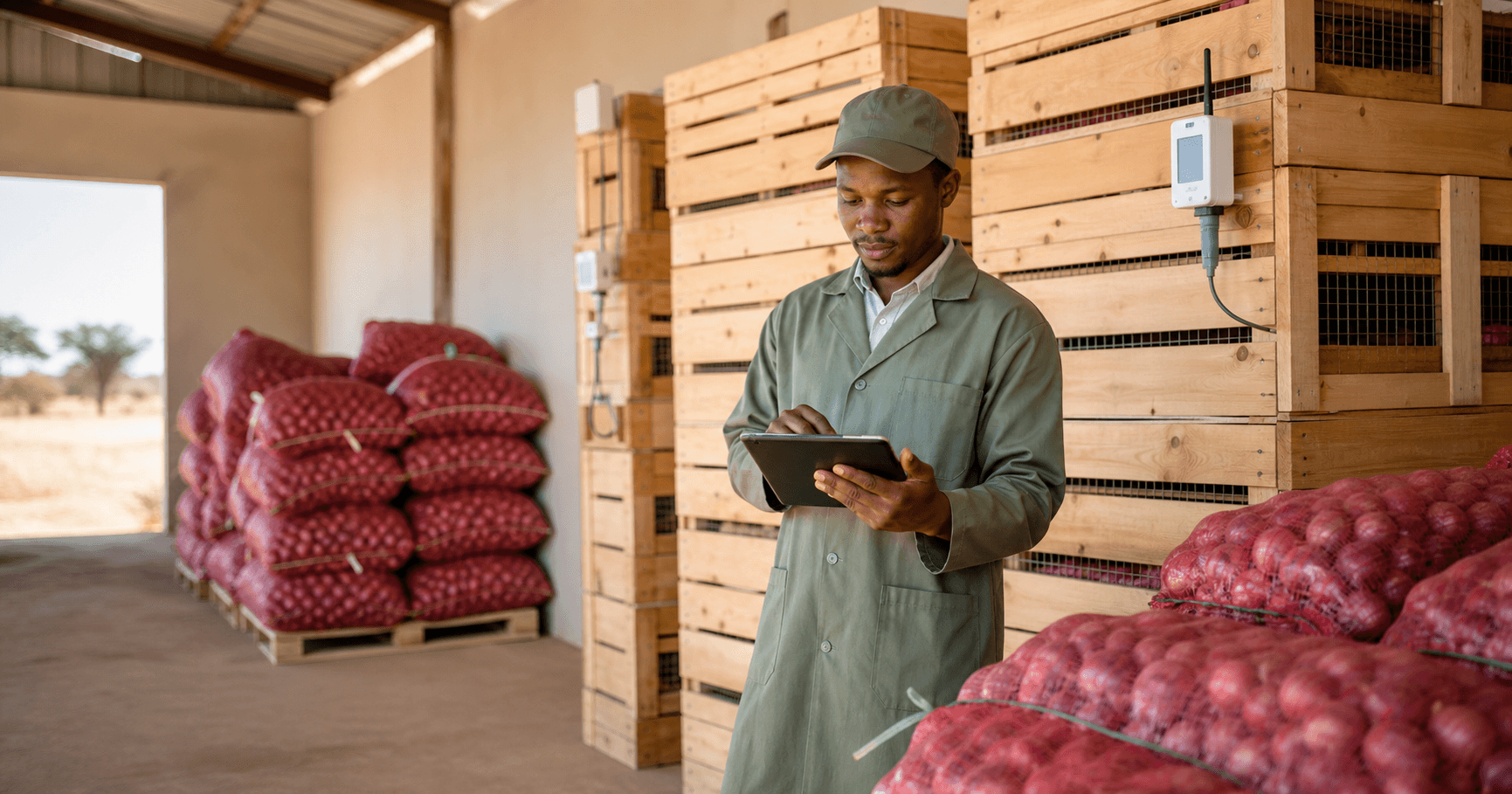
Multi-crop storage: onions, garlic, cereals, peanuts and compatible crops, with a priority on practical, maintainable warehouses.
What we improve
From land preparation to market release, TechnAfrik combines field advisory, smart storage, process automation, and commercial network support.
Support for seed choice, inputs, and preparation of the production season.
Producer support to plan cultivation, harvest, and post-harvest decisions.
Lot organization, ventilation, monitoring, and post-harvest value protection.
Technical solutions to monitor, control, and automate agricultural and agro-industrial operations.
Market-release support and connection with buyers through the TechnAfrik network.
Support for seed choice, inputs, and preparation of the production season.
Producer support to plan cultivation, harvest, and post-harvest decisions.
Lot organization, ventilation, monitoring, and post-harvest value protection.
Technical solutions to monitor, control, and automate agricultural and agro-industrial operations.
Market-release support and connection with buyers through the TechnAfrik network.
The problem to solve
Many producers do not lose value because they produce poorly, but because they lack reliable space to store, organize, and release crops at the right time. Humidity, heat, poor rotation, pests, and pressure to sell quickly reduce margins for producers and traders.
Without storage, producers often sell immediately after harvest, when supply is high and prices are weaker.
Humidity, heat, sprouting, rot, and poor conservation conditions can quickly reduce product value.
When lots are not identified and monitored, it becomes difficult to know what is stored, when to release it, and in what condition.
Storage spaces adapted to local products, with lot separation, airflow, and simple operating rules.
Tracking deposits, withdrawals, volumes, owners, and conditions to better protect stored products.
Multi-crop compatibility: flexible storage settings for bulbs, cereals, and oilseeds according to local demand.
Service models
Producers, cooperatives, and traders should quickly understand how to store, monitor, finance, and retrieve their products.
A producer or trader reserves space according to crop, volume, and storage duration.
TechnAfrik helps track entries, exits, conservation conditions, and responsibilities by lot.
Cooperatives can structure shared volumes and access better logistics organization.
Data and evidence
Each crop tells a concrete story: selling too early, losing quality, missing lot visibility, or releasing product at the wrong moment. These examples show how better organization, suitable storage, and simple data can help protect value while site-validated pilot results are gathered.
Onions
Northern Cameroon
Target: lower losses than non-ventilated traditional storage
Lots are received, separated, and monitored so producers are not forced to sell the full harvest at the weakest price point.
Cereals
Garoua
Target: clearer sack rotation and fewer forgotten lots
Raised storage, tagging, and humidity checks help cooperatives protect volumes until the market release window.
Peanuts
Northern Cameroon
Target: better protected quality before sale or processing
Clean, raised, and tracked sacks limit degradation risks linked to humidity and poor rotation.
FAQ
No. Onions remain a priority crop, and the service also covers garlic, cereals, peanuts, and other compatible crops according to local demand.
No. Post-harvest storage is a priority application, but TechnAfrik can also support broader agri-tech challenges: process automation, operational monitoring, technical control, and agricultural workflow improvement.
No. The message is comparative: smart storage aims for lower losses than traditional practices. Results depend on lot quality, drying, storage duration, and daily operating discipline.
Producers, cooperatives, traders, buyers, and technical partners can request an assessment or demonstration of the storage model.
Yes, this model can be discussed depending on the crop, lot quality, storage duration, and partnership terms. The goal is to make the service accessible when cash payment is difficult immediately after harvest.
Yes. Cooperatives can group volumes, reserve suitable space, and track lots by member, entry date, crop, and planned release.
Smart storage gives producers more time. Instead of selling the whole harvest when supply is high, they can protect quality, monitor lots, and plan a more favorable release to market.
Tell us what you need
To reserve space, discuss a storage partnership, or request a technical assessment, send a message to the team.
Our values
These principles keep TechnAfrik close to producers, clear in its commitments, and useful across the post-harvest chain.
We start from local agricultural realities and build simple, maintainable, useful solutions.
We work clearly on lots, conditions, responsibilities, and the limits of the service.
We use technology when it truly helps: tracking, ventilation, information, and better decisions.
We move with producers, cooperatives, traders, and post-harvest value-chain partners.