TechnAfrik

How it works for each crop

Onions, garlic, cereals, peanuts and more

Each crop needs a different storage logic: drying, ventilation, humidity, handling, and rotation. TechnAfrik organizes those needs into simple crop briefs so teams can store with lower losses than traditional practices.

OnionsGarlicCerealsPeanuts
Multi-crop warehouse for agricultural sacks on pallets

How it works for each crop

Compare storage conditions and expected gains

The comparisons below are qualitative. They explain how smart storage can reduce losses compared with traditional storage without promising fixed figures before field validation.

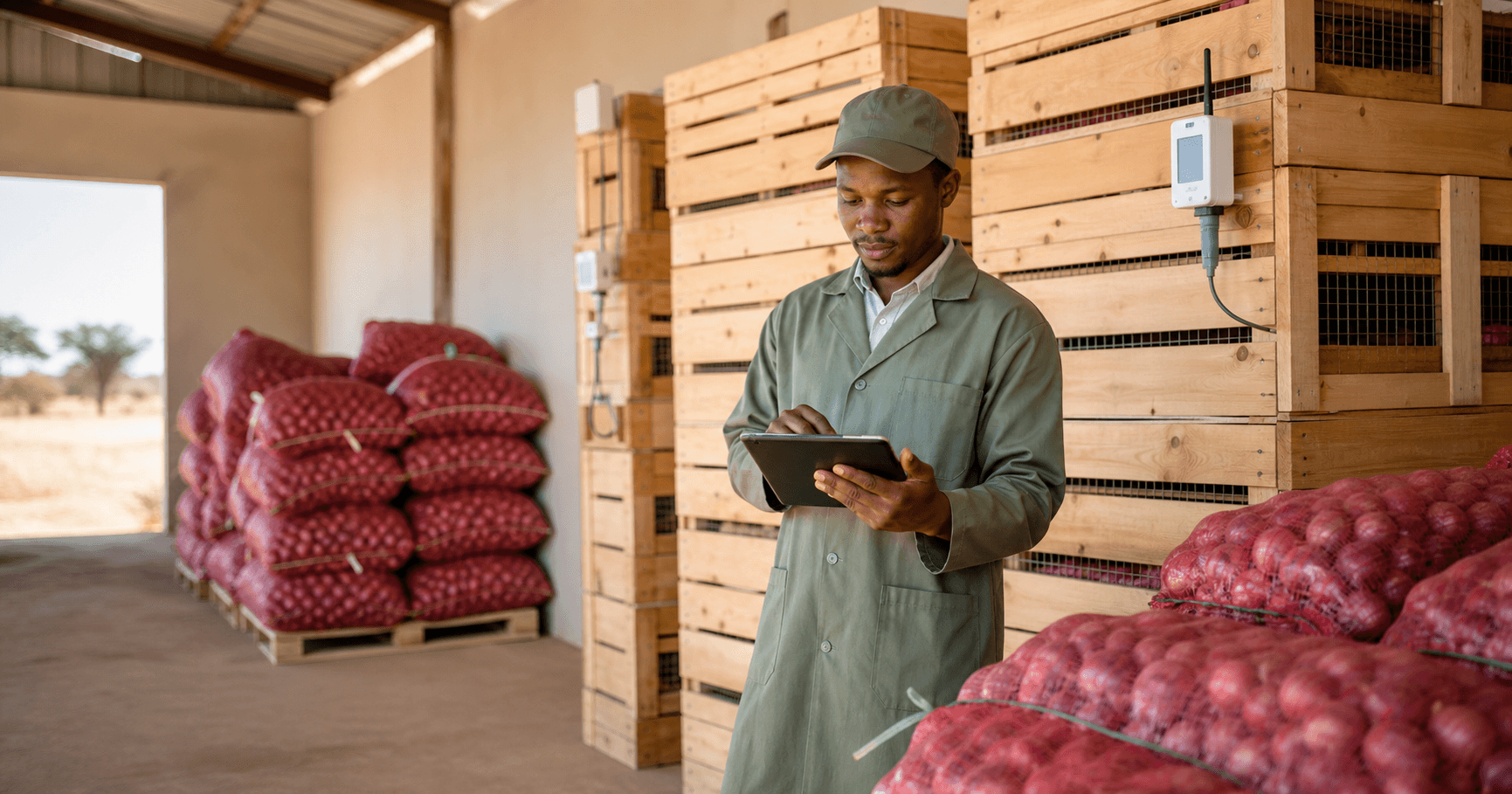
Onions stored in a ventilated warehouse

Bulbs

Onions

Regular ventilation, dry lots, and physical separation to limit rot and sprouting.

Traditional storage
Higher risk when bulbs are piled, damp, or poorly ventilated.
Smart storage
Losses are generally lower with sorting, airflow, separation, and planned release.
Temperature
Cool, dry, well ventilated
Humidity
Low to moderate humidity
Handling
Sacks or racks, separated lots, visual checks
Capacity
Small lots to mass storage
  • Keep wet or damaged bulbs out of incoming lots.
  • Raise sacks to keep air moving around the product.
  • Plan release before sprouting signals appear.
View flow
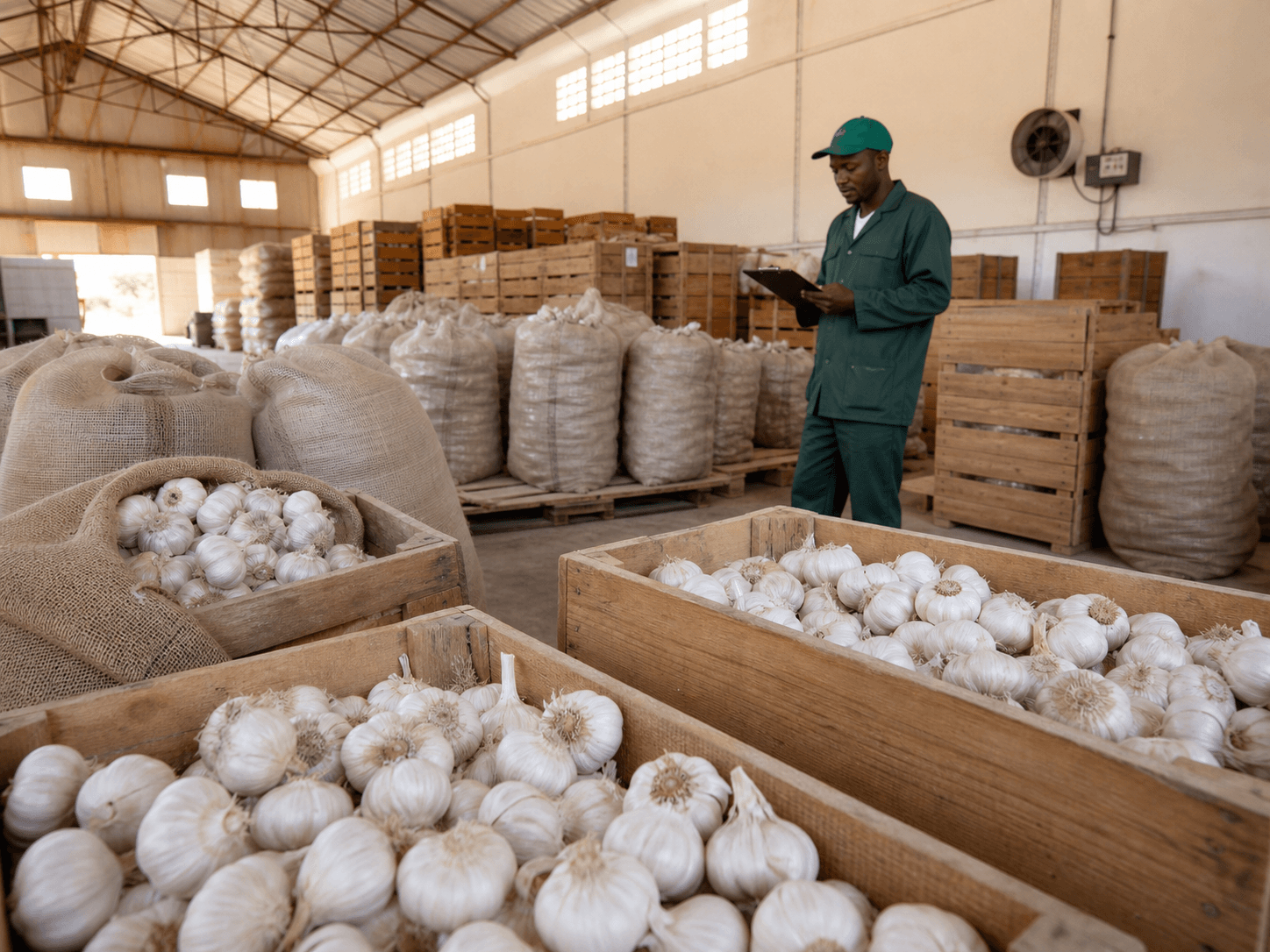
Garlic and onion bulbs stored in a ventilated warehouse

Bulbs

Garlic

Dry, ventilated, separated storage to preserve bulbs and limit mould and sprouting.

Traditional storage
Higher risk when garlic stays damp, poorly sorted, or stored with more sensitive lots.
Smart storage
Quality is better protected through drying, airflow, separation, and regular visual checks.
Temperature
Cool, dry, well ventilated
Humidity
Low humidity
Handling
Separated lots, sacks or racks, gentle handling
Capacity
Specialized lots to grouped storage
  • Confirm bulbs are dry before storage.
  • Avoid mixing with damp or damaged lots.
  • Monitor for mould, sprouting, or heating signals.
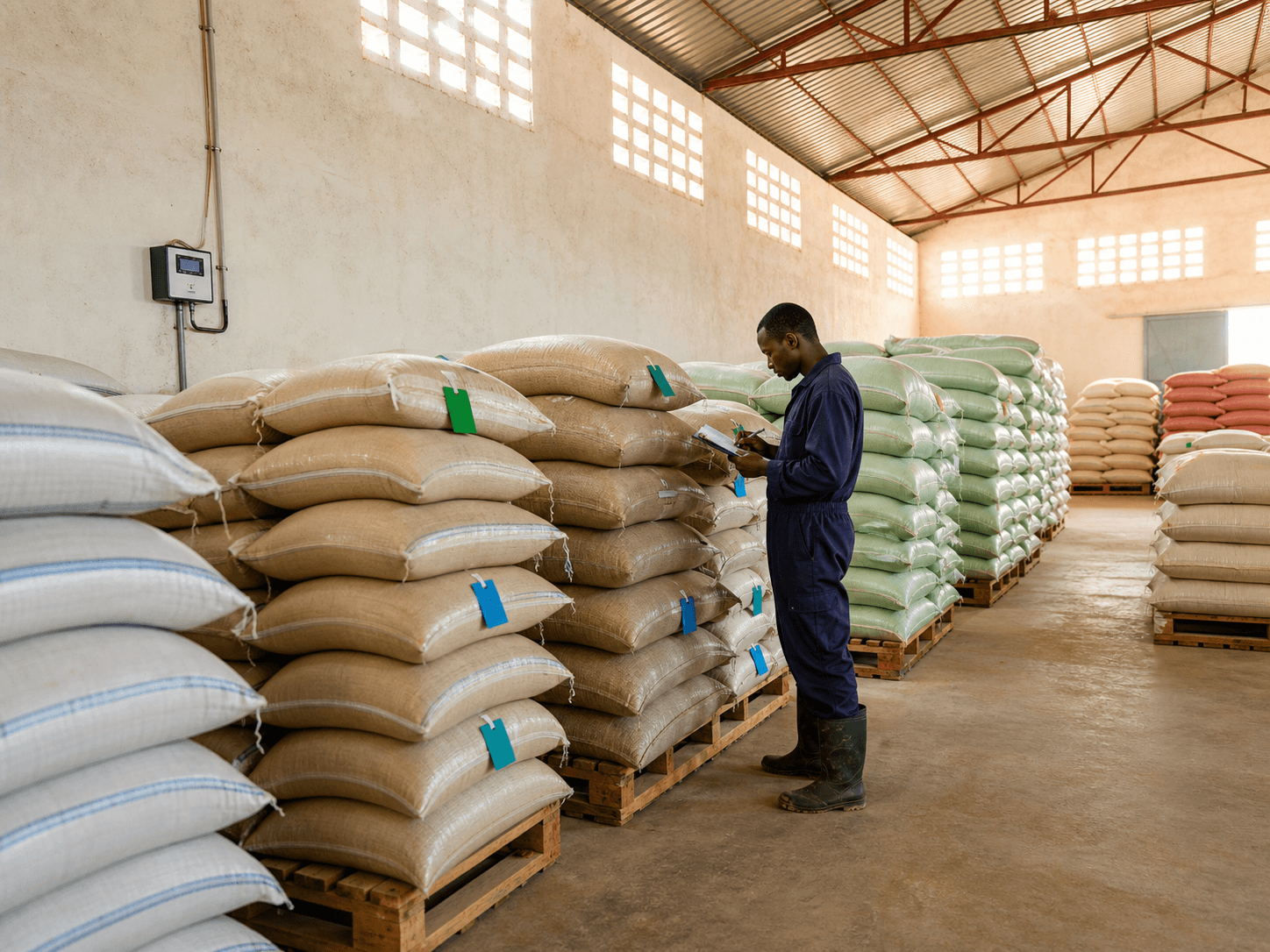
Cereal sacks stored on pallets

Cereals

Cereals

Correct drying, raised storage, and protection from humidity and pests.

Traditional storage
Higher risk when sacks sit on the floor or lots are not tracked.
Smart storage
Losses are reduced compared with traditional storage through drying, pallets, and monitoring.
Temperature
Dry, stable, away from direct sun
Humidity
Low humidity
Handling
Tagged sacks, pallets, first-in first-out rotation
Capacity
Sacks, pallets, cooperative lots
  • Check drying before the lot is accepted.
  • Raise sacks to reduce contact with the floor.
  • Inspect regularly for pest signals.
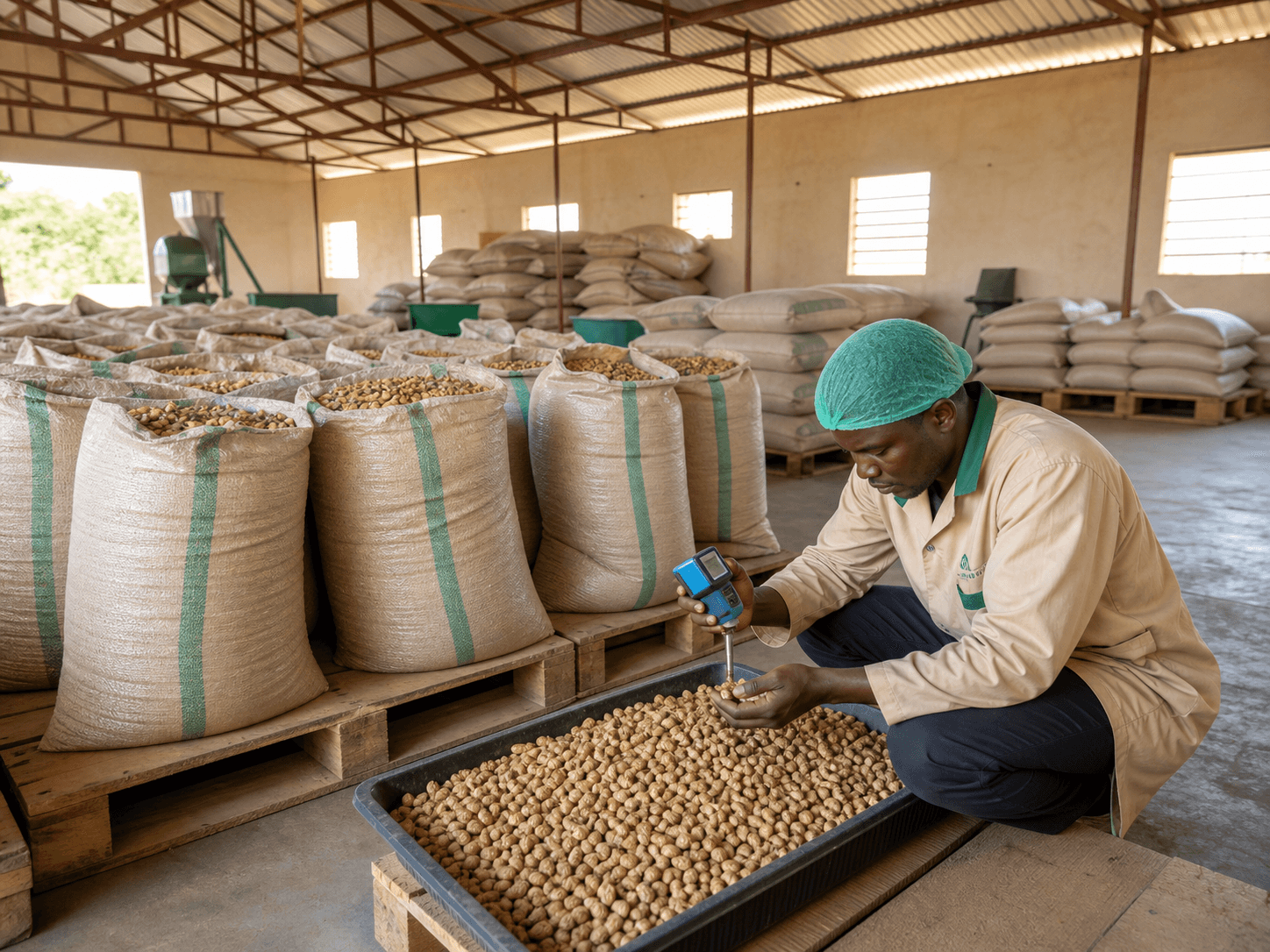
Professional peanut storage in a clean warehouse

Oilseeds

Peanuts

Drying, cleanliness, and tracked lots to preserve quality before sale or processing.

Traditional storage
Quality risk increases when drying, cleanliness, or rotation is weak.
Smart storage
Quality is better protected with dry, clean, raised, and tracked lots.
Temperature
Dry, clean, ventilated
Humidity
Low humidity
Handling
Closed sacks, pallets, clean zones
Capacity
Sacks and cooperative lots
  • Check drying before bagging.
  • Avoid direct contact with the floor.
  • Track entry dates to simplify rotation.

Data and evidence

Field situations that show the model's potential

Each crop tells a concrete story: selling too early, losing quality, missing lot visibility, or releasing product at the wrong moment. These examples show how better organization, suitable storage, and simple data can help protect value while site-validated pilot results are gathered.

Onions

Bulb cooperative

Northern Cameroon

Target: lower losses than non-ventilated traditional storage

Lots are received, separated, and monitored so producers are not forced to sell the full harvest at the weakest price point.

Cereals

Dried cereal lots

Garoua

Target: clearer sack rotation and fewer forgotten lots

Raised storage, tagging, and humidity checks help cooperatives protect volumes until the market release window.

Peanuts

Peanut lots

Northern Cameroon

Target: better protected quality before sale or processing

Clean, raised, and tracked sacks limit degradation risks linked to humidity and poor rotation.

Send an enquiry

Tell us what you need

Contact TechnAfrik Cameroon

To reserve space, discuss a storage partnership, or request a technical assessment, send a message to the team.

See how storage reduces losses for your crop - request a demo.